Why your single source of truth is holding you back: 3 reasons for flexibility.
“I just want to see everything in one place.” It is one of the most common requests from directors and IT managers. The call for a single source of truth is understandable: in a landscape of fragmented applications, you are looking for overview and control. But therein lies a paradox. In the hunt for that one unified view, many companies unintentionally build a digital prison. They fixate their data in a static model, whereas a flexible data model is what keeps an organization agile.
When your strategy changes, your data must follow. However, if your data is completely fixed, every minor adjustment to your IT architecture costs months of time and tens of thousands of dollars. The question then becomes: is your current setup a foundation for growth, or a ball and chain?
1. The wrong thought: "We need a new application"
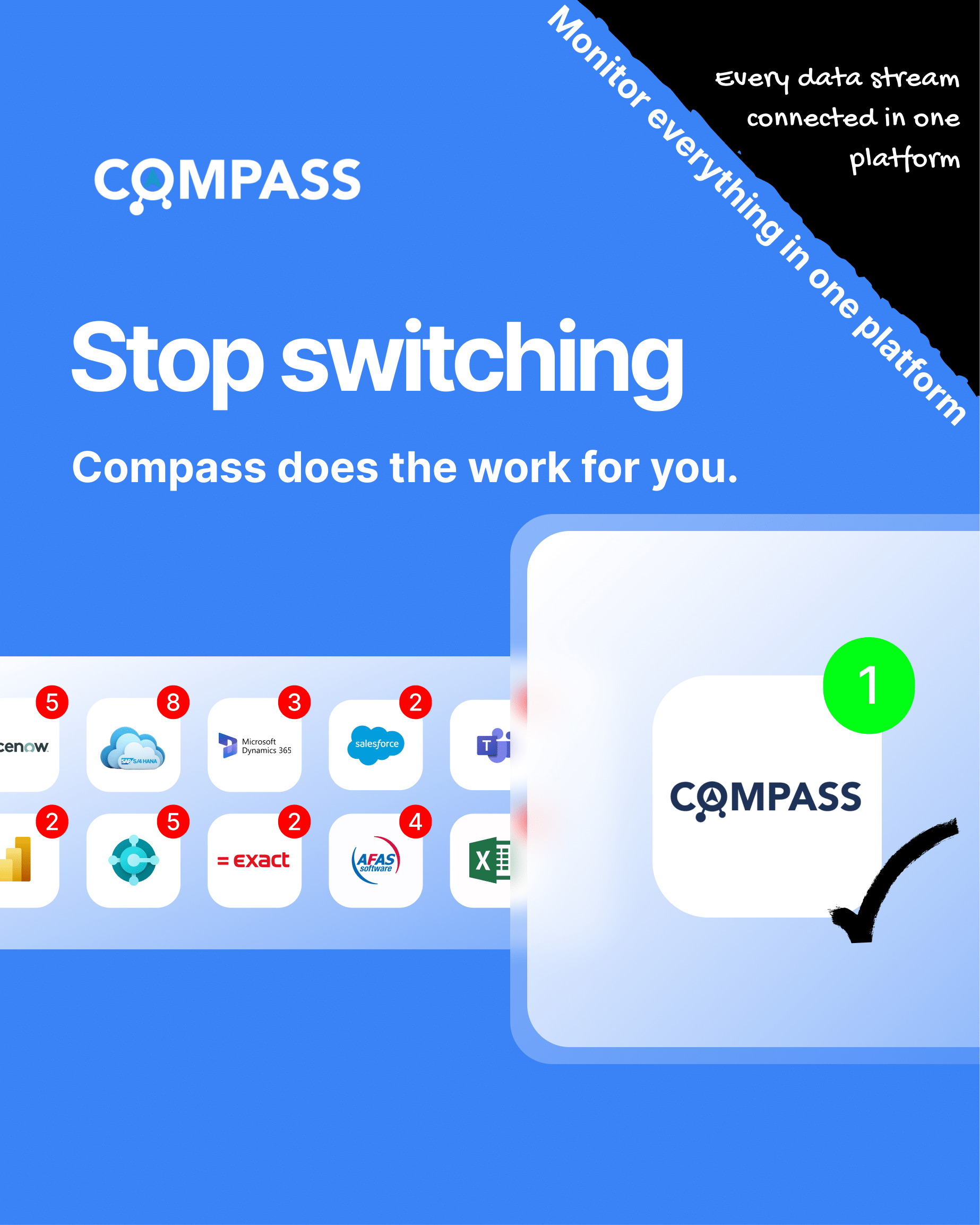
When the overview is missing, the first reflex is often to switch to a new system. This leads to grueling two-year migration projects and a team that ends up burnt out. The reality is that the applications you have now are often already good enough. The solution does not lie in replacing tools, but in connecting them intelligently within a modern IT architecture. At Compass RM, our message is simple: stop switching and start connecting. Check out our integration page for more information.
2. From a fixed model to a modern Data Fabric
A traditional single source of truth is often built as an immovable end station. We are introducing a more modern concept: the Data Fabric.
Instead of a static database, we build a flexible network of data streams. The great advantage of a flexible data model is that it breathes with you. In a Data Fabric architecture, adding a new application is a matter of configuration, not of tearing down and rebuilding. You stay in control the moment your strategy changes.
3. The crucial difference: The validation and structuring layer
An overview is only valuable if you can blindly trust the data. Many integration platforms simply push data from A to B, including all the "garbage." Our approach contains one crucial difference: we place a central validation layer between your sources and your central dashboard.
This layer plays an active role in data quality assurance. Before data reaches your single source of truth, it is strictly audited for duplicates and missing fields. Only clean, validated data is granted access. This ensures that the source remains pure and that you can operate with 100% certainty.
The benefits of an agile approach
By choosing a flexible layer on top of your existing systems, you choose speed and return on investment:
-
No migration stress: You don’t need to launch multi-year projects; you simply extract more value from what you already have.
-
Strategic agility: Your flexible data model changes with you immediately, ensuring your IT architecture never slows you down.
-
Cost savings: You avoid skyrocketing costs for consultants who need months to adjust a fixed data model.
-
Guaranteed data quality assurance: You are looking at information that has been purified before it lands in your reporting.
Conclusion
A single source of truth should give you the freedom to operate, not the limitation to change. By unlocking your data via a Data Fabric approach, you transform your IT architecture from a rigid structure into an agile powerhouse. Stop chasing the "perfect application" and start building the perfect connection. It is time to eliminate manual work and finally empower your team to innovate on a foundation of 100% validated data.
With Compass RM, you get the overview you need today, with the flexibility you require tomorrow.